Most Chapel Hill faucet problems come down to a cartridge, washer or O-ring that has worn out, and the fixture itself can often be saved. In the town's 1970s and 1980s houses, a tired shutoff valve or supply hose under the sink is frequently part of the same visit. Call the number on this page to be connected with a local plumber in Chapel Hill.
Clues that a faucet needs attention
- A slow drip from the spout that tightening the handle won't stop
- A wet ring on the counter or vanity top around the faucet's base
- A lever that feels gritty, loose or stiff, or only shuts off in one exact spot
- Hot and cold that won't blend the way they used to
- Puddles, stains or a warped panel on the floor of the sink cabinet
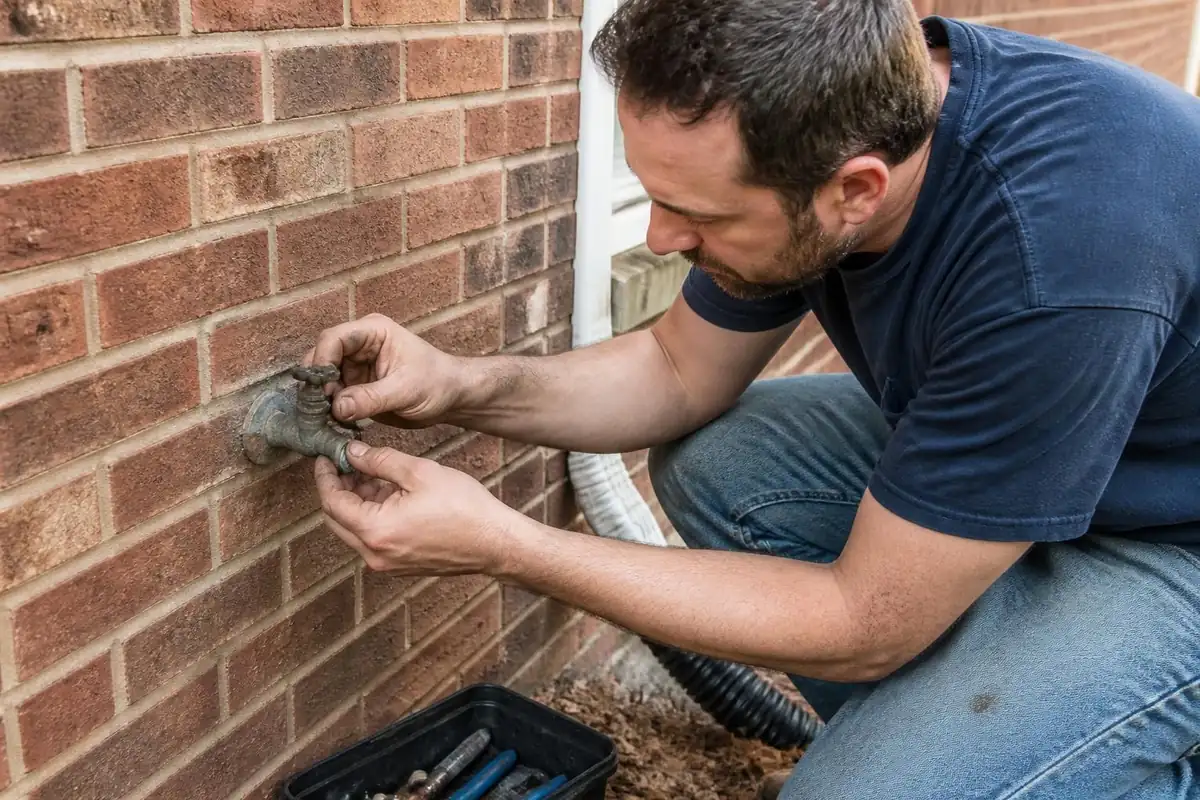
- An outdoor spigot that drips after it's closed or sprays from behind the handle
Faucets, water and houses in Chapel Hill
Chapel Hill gets its water from OWASA, which draws mainly from University Lake and Cane Creek Reservoir and treats it at the Jones Ferry Road plant. OWASA disinfects with chloramines for most of the year and switches to chlorine for a short stretch each spring. Chloramine can be tougher on some rubber washers and seals than chlorine, so in an older faucet that has never been rebuilt, hardened or swollen rubber parts are a common find. OWASA's published reports don't give a hardness figure, so scale shouldn't be assumed until a plumber has the parts out.
The town's housing leans toward the 1970s through 2000s, with a median build year of 1988 and about 35% of homes older than 1980. Around the historic streets near campus, such as the Gimghoul neighborhood, two-handle compression faucets and multi-turn stops that haven't moved in decades are still around. Newer areas like Meadowmont and Southern Village tend to have single-lever cartridge faucets reaching middle age.
OWASA treats the line from its system to your house as your private service line, so everything on the house side, faucets and hose bibs included, is yours to keep up. The Town requires a Trade Work permit for installing, repairing or altering plumbing; for anything beyond a simple parts swap, the plumber can tell you whether one applies.
What moves the price up or down
- Rebuild or new fixture. Seals or a cartridge cost less in parts and time than pulling the faucet and setting another.
- Parts supply. Major brands are easy to match; discontinued or unbranded faucets may not be worth chasing parts for.
- What's under the sink. Seized stops and old supply lines are usually replaced while the water is shut off anyway.
- Working room. Corroded mounting nuts and tight vanities add time.
When you make the call
You'll be put through to an independent plumber who covers Chapel Hill. Say which faucet is acting up, whether it has one handle or two, and where the water shows up. A quick photo of the faucet and the valves beneath it helps the plumber bring matching parts.
Faucet Repair questions in Chapel Hill
Is chloramine in the tap water hard on faucet seals?
Is an old faucet something to worry about for lead?
Water comes out under the handle or around the faucet base. What wore out?
Can I pick out a faucet myself and have a plumber install it?
More plumbing services in Chapel Hill
Faucet Repair nearby
Sources
Last updated: