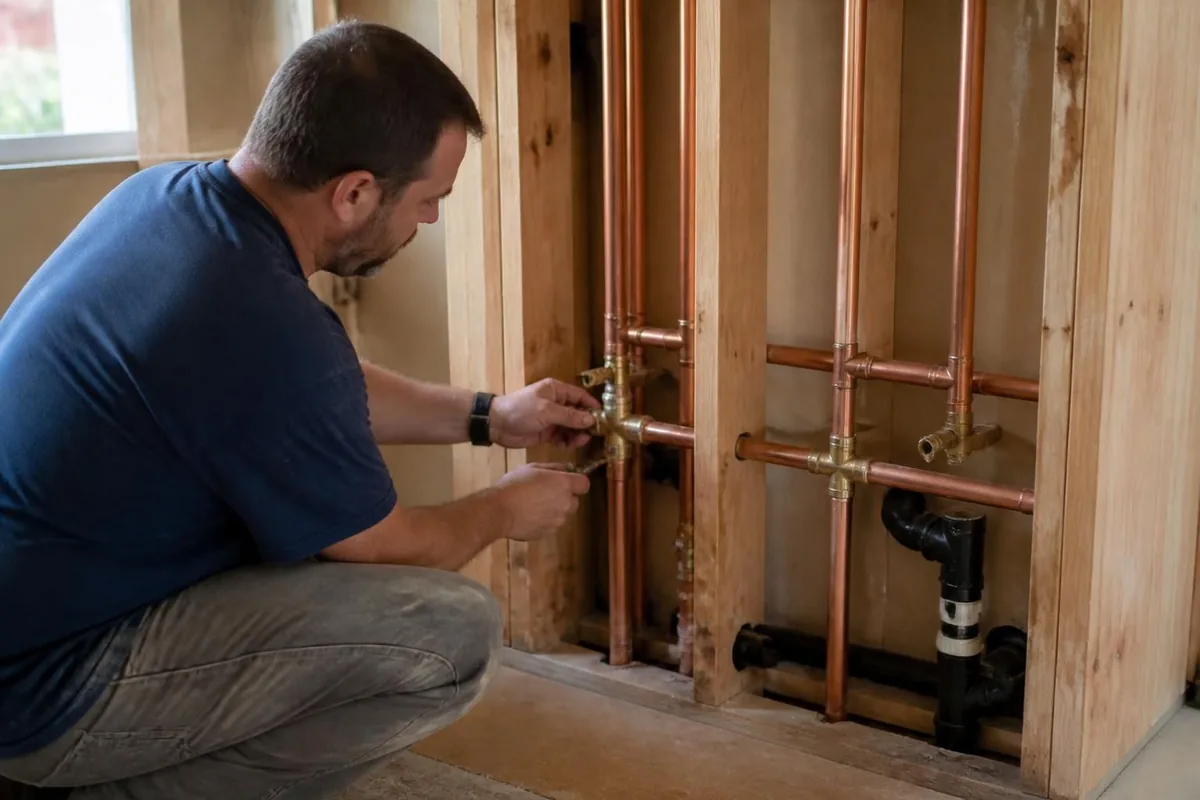
Repiping in Chapel Hill most often comes up in houses from the 1970s and earlier, plus homes of the 1980s and early 1990s that were plumbed with polybutylene. A plumber removes or abandons the old supply pipe and runs new PEX or copper to each fixture, in one go or a section at a time. Call the number on this page to be connected with a local plumber in Chapel Hill.
When patching stops making sense
- Leaks have turned up in two or three different rooms within a short span
- Copper runs show blue-green crusting at fittings or tiny wet spots along the pipe
- Gray plastic lines stamped PB feed the water heater or the sinks
- Hot water arrives weak at several fixtures even after aerators are cleaned
- Walls or ceilings already carry patches from earlier pipe repairs
A single failure on otherwise sound pipe is a repair job. Repeated failures on pipe of the same age usually mean the rest of it is not far behind.
Chapel Hill housing and water
The town's median home was built in 1988, and about 35% of houses predate 1980, according to Census survey data. That older group sits largely in the historic neighborhoods around the university, such as the Gimghoul district, where original copper or galvanized steel can still be in service. Planned communities like Meadowmont and Southern Village are much newer, and a whole-house repipe there is rarely the first answer to a leak.
Water comes from OWASA, which treats lake water at its Jones Ferry Road plant and uses chloramine for most of the year, with a short switch to chlorine each spring. In OWASA's 2022 report, sampling at 30 homes found lead at 0 ppb and copper at 0.029 ppm at the 90th percentile, both well under action levels, and OWASA says its service line inventory found no lead lines. Those results describe the water and the utility side. They don't tell you whether the copper inside your walls is thinning with age, which takes an inspection. OWASA treats the line from its system to your house as your private service line.
What drives the cost
- House size and fixture count. Every bathroom, kitchen and laundry adds runs and fittings.
- How the house is built. A crawl space makes routing easier; a slab or finished basement pushes lines into walls or the attic.
- Pipe choice. PEX generally needs fewer labor hours than soldered copper.
- Plaster and older finishes. Older homes near campus can take more care to open and close up.
- The private service line. Replacing the yard line at the same time adds trenching.
What to expect on the call
You'll be connected with an independent local plumber who works in Chapel Hill. Mention the year the house was built, what pipe you can see at the water heater, and where leaks have shown up. The Town requires a Trade Work permit for altering or repairing a plumbing system, including water lines, and the plumber normally takes care of applying for it.
Repiping questions in Chapel Hill
How do I find out what kind of supply pipe my house has?
Does the water utility's service line inventory cover the pipes inside my home?
How much wall and ceiling has to be opened?
Is PEX or copper the better choice for new supply lines?
More plumbing services in Chapel Hill
Repiping nearby
Sources
Last updated: